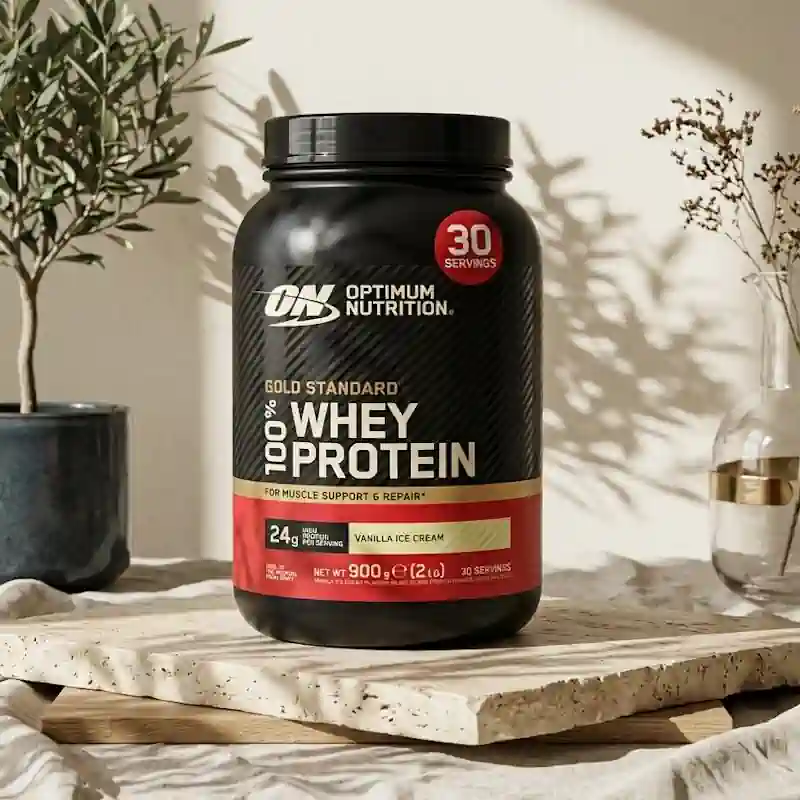
Whey Protein Concentrate
Review the scientific evidence and bio-availability of Whey Protein Concentrate, followed by our curated database of formulations.
Whey Protein Concentrate (WPC) is a concentrated form of globular proteins isolated from whey, the liquid byproduct of the cheese-making process. Unlike whey protein isolate, concentrate typically contains 70–80% protein by weight, retaining a higher proportion of natural lipids, lactose, and bioactive sub-fractions such as immunoglobulins and lactoferrin. Historically viewed as a byproduct of the dairy industry, WPC emerged in the mid-20th century as a premier nutritional supplement due to its superior bioavailability and complete amino acid profile, serving as a foundational tool for cellular repair and physical optimization.
Clinical Benefits & Mechanism of Action
Whey Protein Concentrate functions through several distinct physiological pathways to support body composition, metabolic health, and systemic recovery:
- mTOR Pathway Support: WPC is exceptionally high in Branched-Chain Amino Acids (BCAAs), particularly L-Leucine. Leucine acts as a primary signaling molecule that interacts with the Mechanistic Target of Rapamycin (mTORC1) pathway, the master regulator that supports normal muscle protein synthesis (MPS).
- Support for Nutrient Partitioning: WPC interacts naturally with the release of incretin hormones, specifically Glucagon-like peptide-1 (GLP-1) and Glucose-dependent insulinotropic polypeptide (GIP). This assists in supporting a healthy postprandial insulin response, which aids in regular glucose disposal and efficient nutrient partitioning.
- Glutathione Precursor Support: WPC is rich in the amino acid Cysteine, which serves as a key substrate for the natural synthesis of Glutathione (GSH), the body’s primary endogenous antioxidant. This supports the baseline cellular defense system against oxidative stress.
- Microbiota Modulation: Emerging research suggests that the bioactive peptides in WPC can interact favorably with the gut environment, promoting a supportive environment for beneficial commensal bacteria and reinforcing the natural metabolic potential of the microbiome.
Scientific Sources & Clinical Trials
- A randomized controlled trial in healthy participants to compare the insulinogenic effects of whey protein and pea protein co-ingested with glucose.
- Influence of Micro–Nano bubbles and whey protein Concentrate-80 on the properties of a sweetened fermented dairy drink
- Supplementation with Animal- and Plant-Derived Proteins Modulates the Structure and Predicted Metabolic Potential of the Gut Microbiota in Elite Football Players.